UNTIL WE MEET AGAIN (Sources) Helen Grace & Phaptawan Suwannakudt by Helen Grace

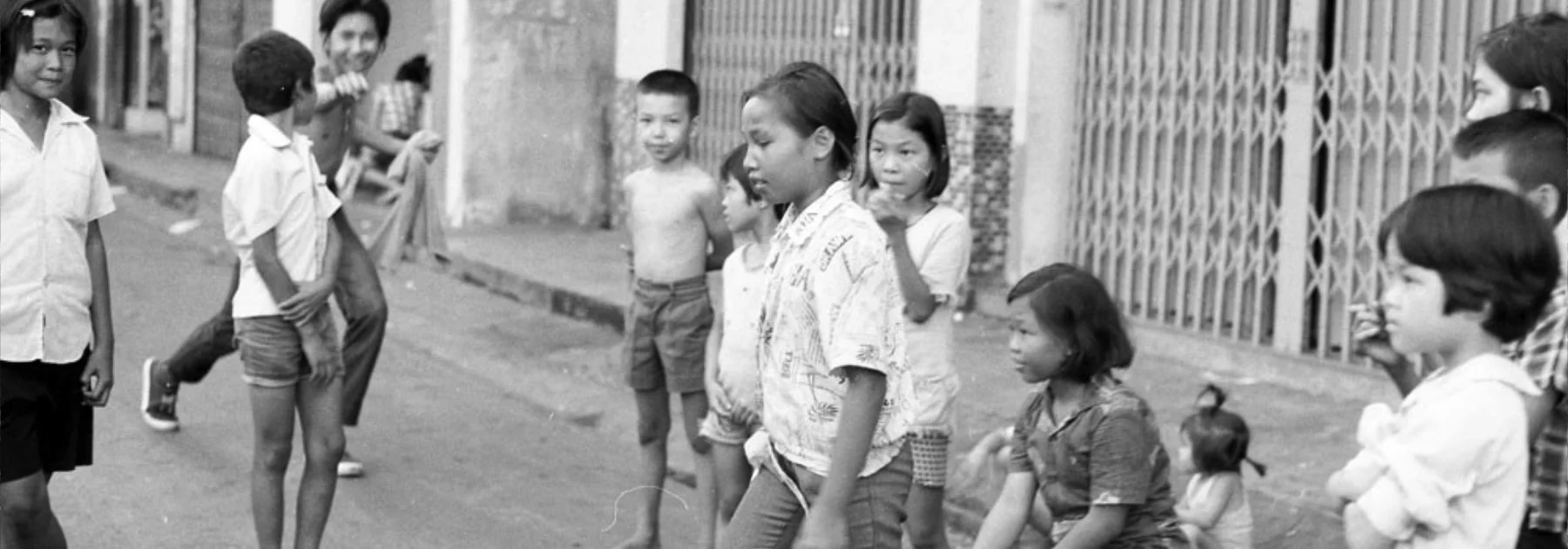
Helen Grace, Bangkok, April 1975

We’re happy to announce the opening of our show at Cross Art Projects (April 11th - May 9th, 2026)

"It's no easy feat, nor a mere coincidence, for two people to meet, be destined to meet again, and then to truly do so. But will it be only a fleeting event, or merely something briefly noted in a diary?"

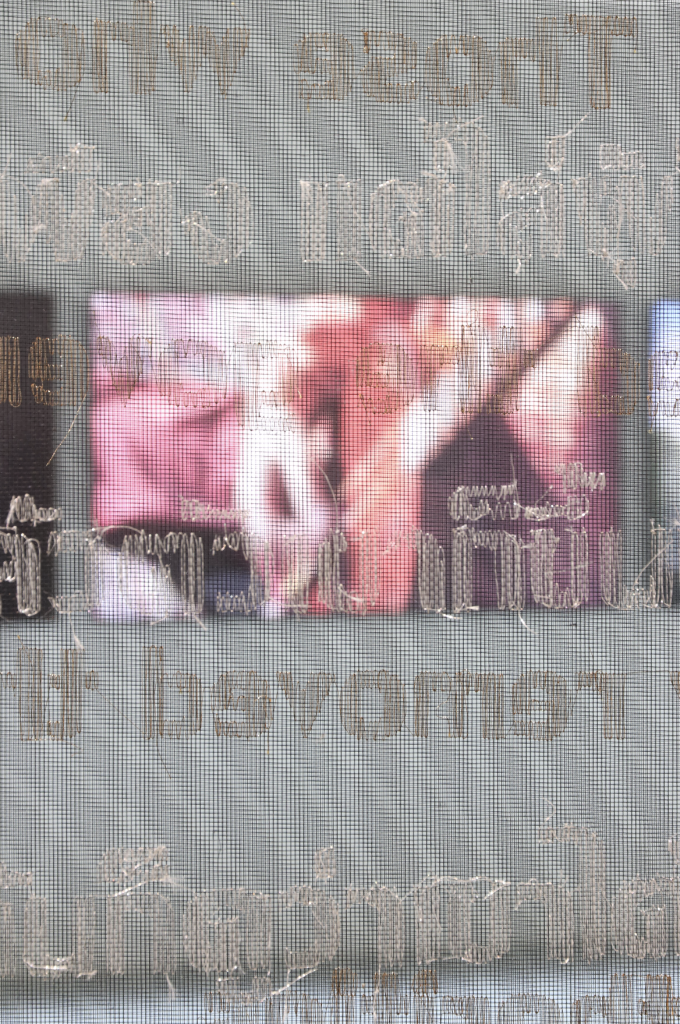
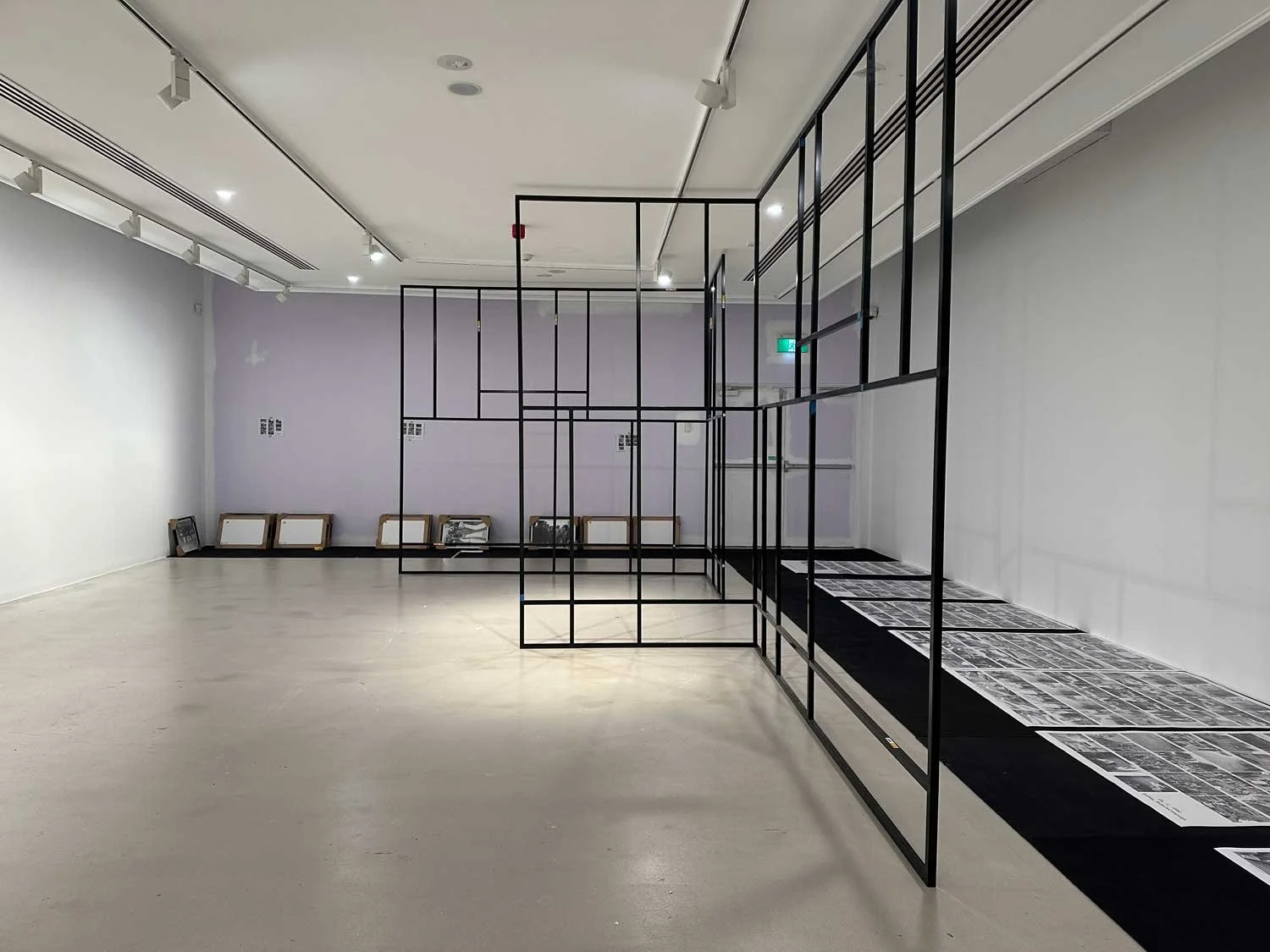
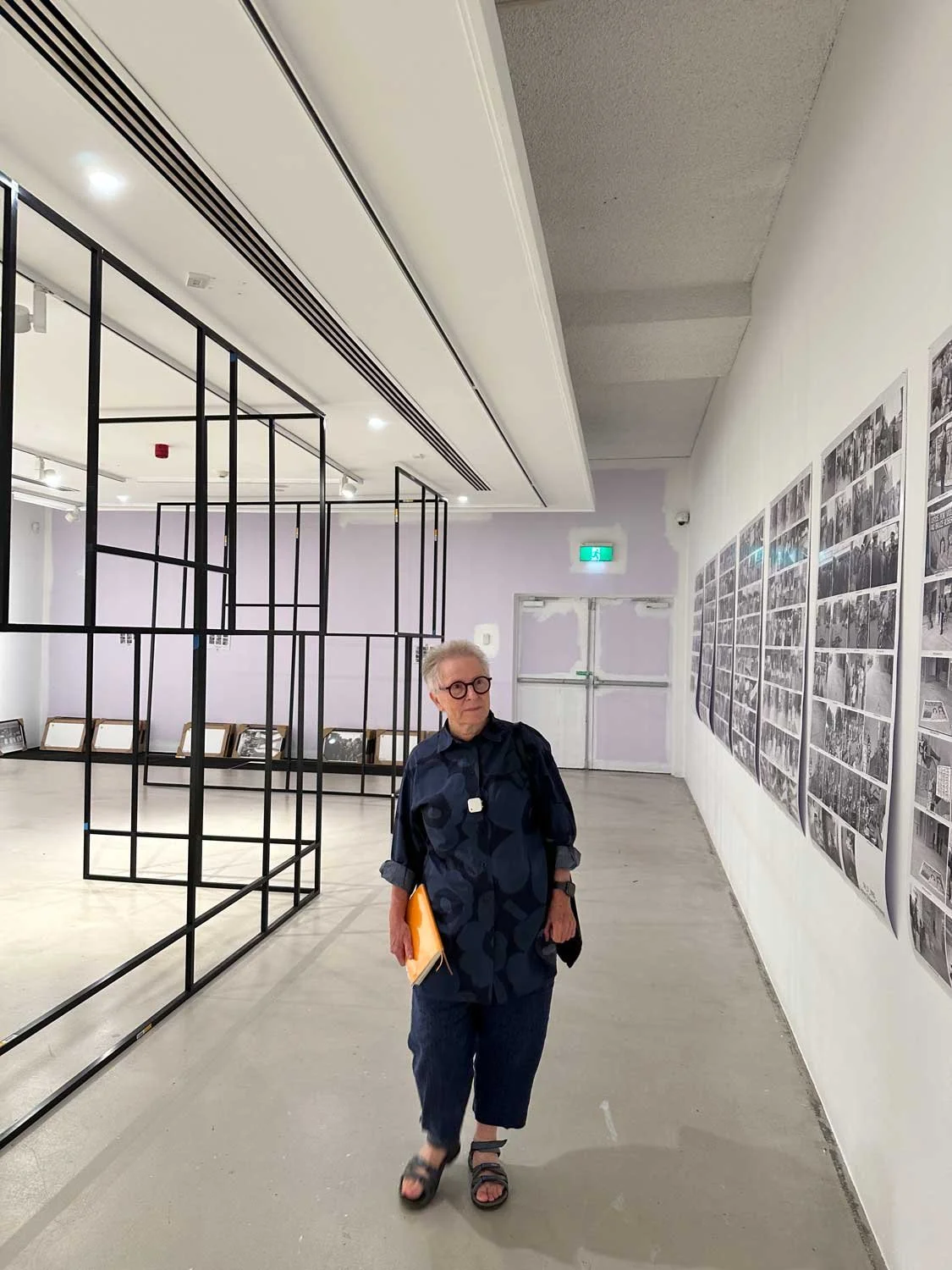
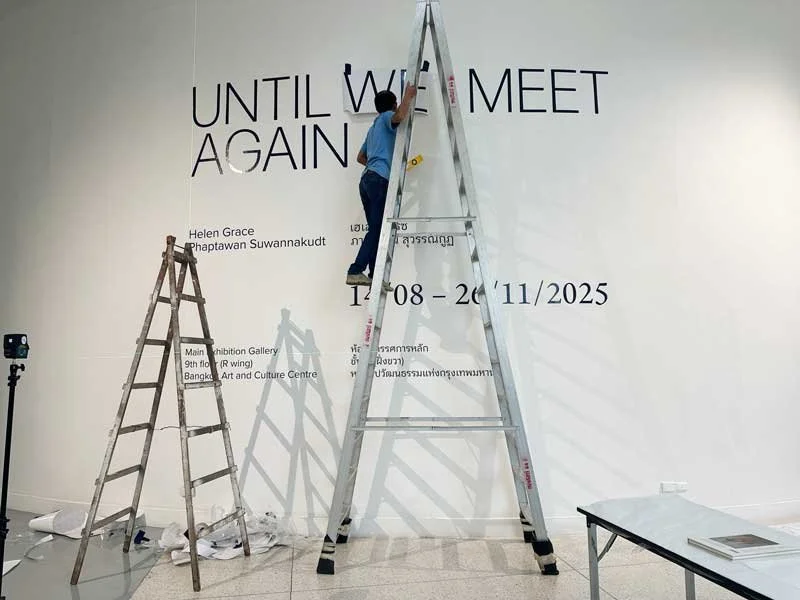
Until We Meet Again (Sources) is a dialogue between Helen Grace and Phaptawan Suwannakudt that charts shifts in gender roles across cultures — Australia, Thailand and Hong Kong — over a period of fifty years. This exhibition is a celebratory revisiting of Until We Meet Again จนกว่าเราจะพบกันอีก held at Bangkok Art and Culture Centre (BACC) in 2025.
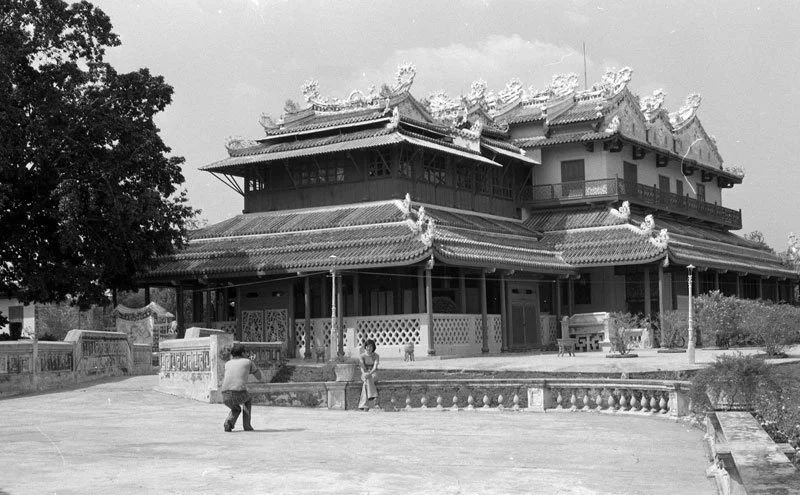
Helen Grace, Bang Pa-In, April 1975

The exhibition is an installation-sculpture, composed of memory traces over these decades. The artists have each lived through wars and motherhood; destruction and creation. They are guided by serendipity and synchronicity and real and imagined intersections as they explore the times and spaces that have shaped their lives and their art practices.

The installation draws partly on these spatial experiences and partly on the stories of small lived moments set beside world histories and regional histories, that span Thailand, Australia, Hong Kong, Vietnam, and Cambodia. The artists dream of borderless worlds, just before fear and darkness begin to obscure the openness they seek. This historical and panoramic narrative is realised through spatial composition – comprising video screens and painted screens.

This new work emerged through a process of dialogue and exchange that included circulating images and translations as well as site visits. The narratives touch on the influence of popular culture and the flows of time and water—the Chao Phraya beside which Phaptawan was born in Bangkok Noi, and the aquaculture systems of Gunditjmara Country, where Helen was born.

On Gunditjmara Country, the artists visited cultural landscapes, meeting with elders and encountering aspects of Country together for the first tune in this volcanic plain, where ancient aquaculture systems were engineered for eel trapping and crop cultivation over millennia, they were immediately struck by a geological feature — Mount Elephant, a scoria cone formed by a volcanic eruption more than 30,000 years ago. The elephant in the landscape speaks to those who live with it, although many European setters failed to recognise the intricacy of Indigenous engineering present all along, in plain sight.

Both artists have returned to the landscapes of their childhood, accompanied by one another walking familiar paths and undertaking imagined water journeys to reimagine their origins. In Bangkok No and in Western Victoria, they reconnect with ancestors, landscapes, stories, and dreams. This exhibition brings together the practices of two established senior women artists, allowing them to extend their work in new directions. A return to source is always the beginning of renewal.

Until We Meet Again, Bangkok Art and Culture Centre, August to November 2025
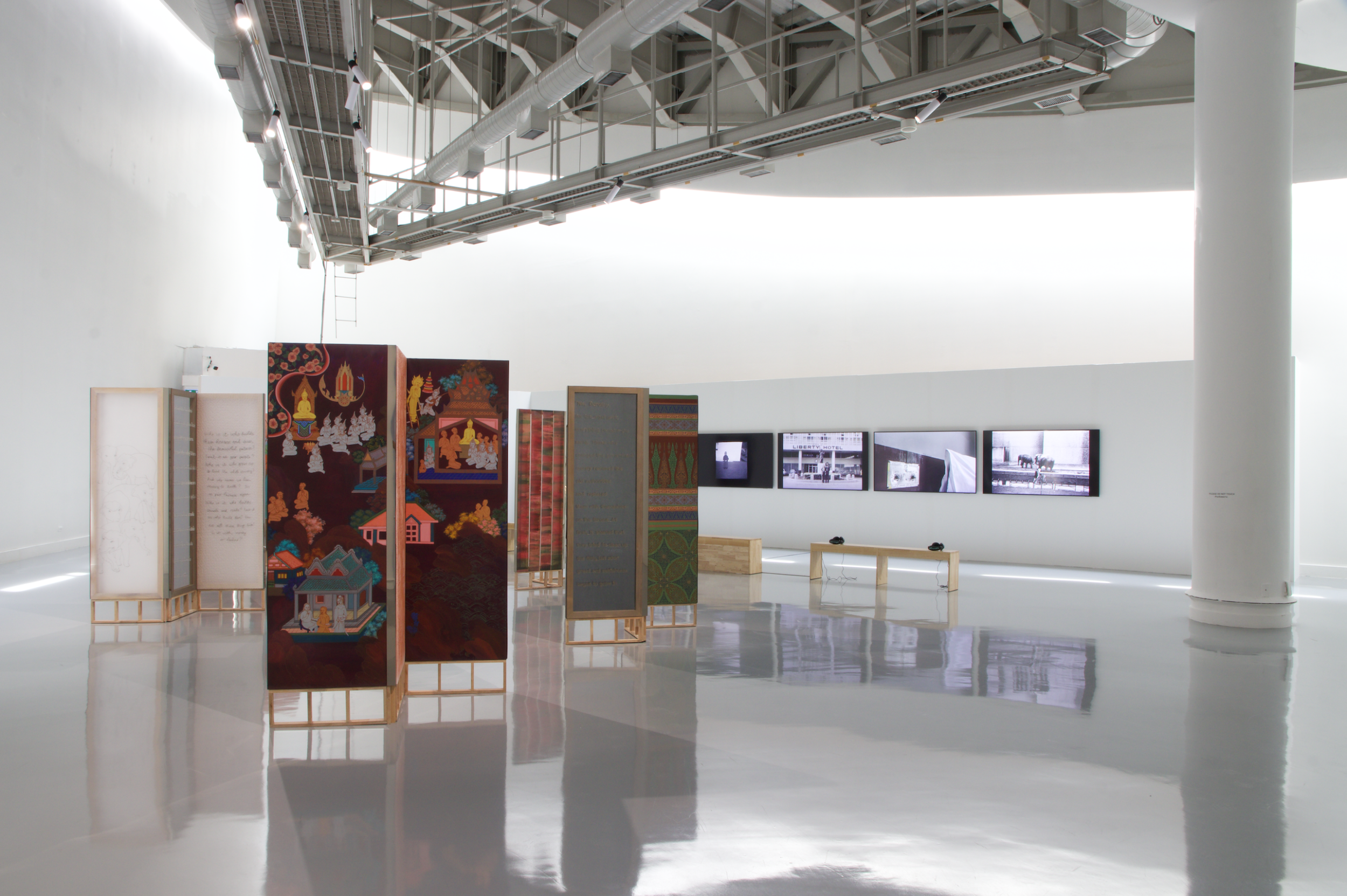
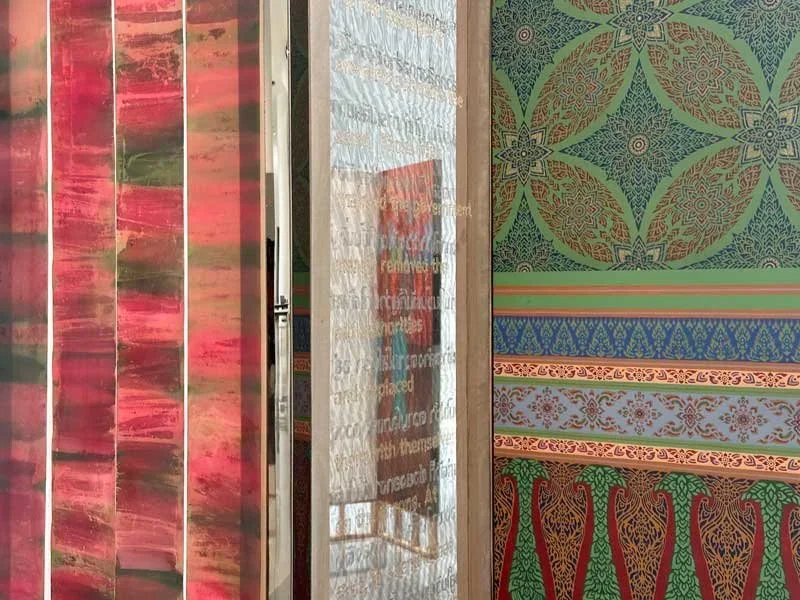
‘Until We Meet Again’ - installation view, Bangkok Art and Culture Centre, Aug 16 - Nov 23, 2025
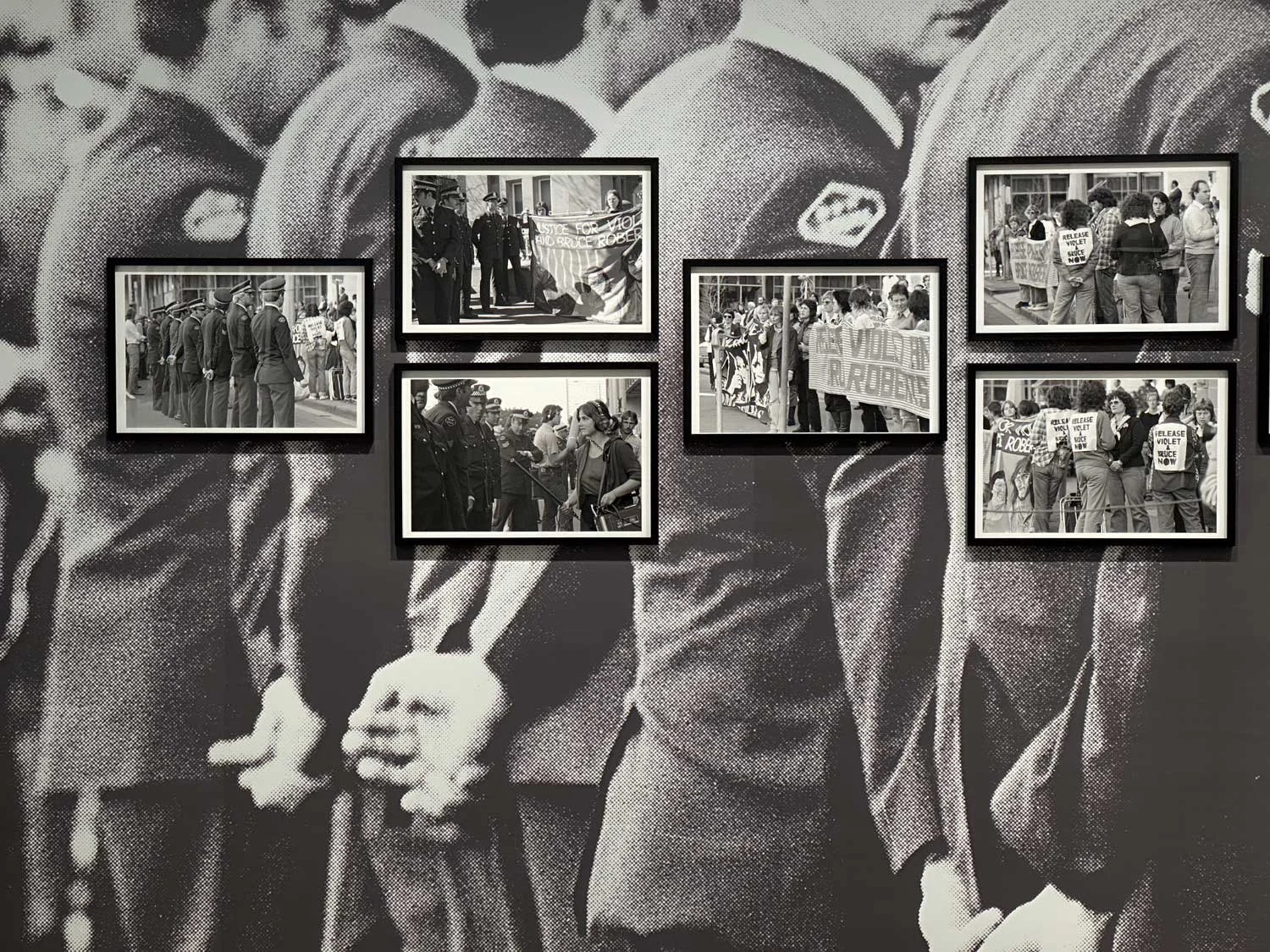
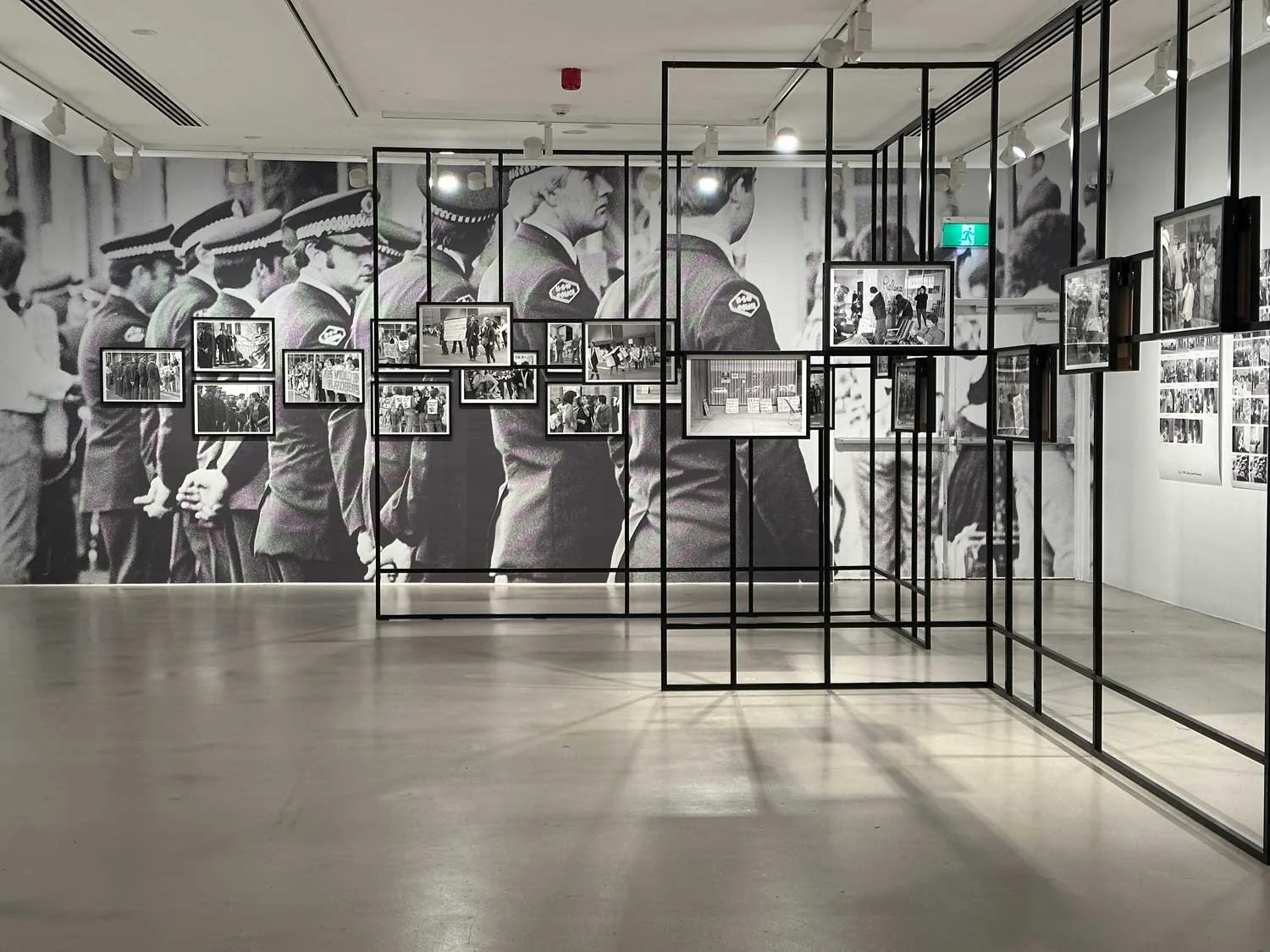
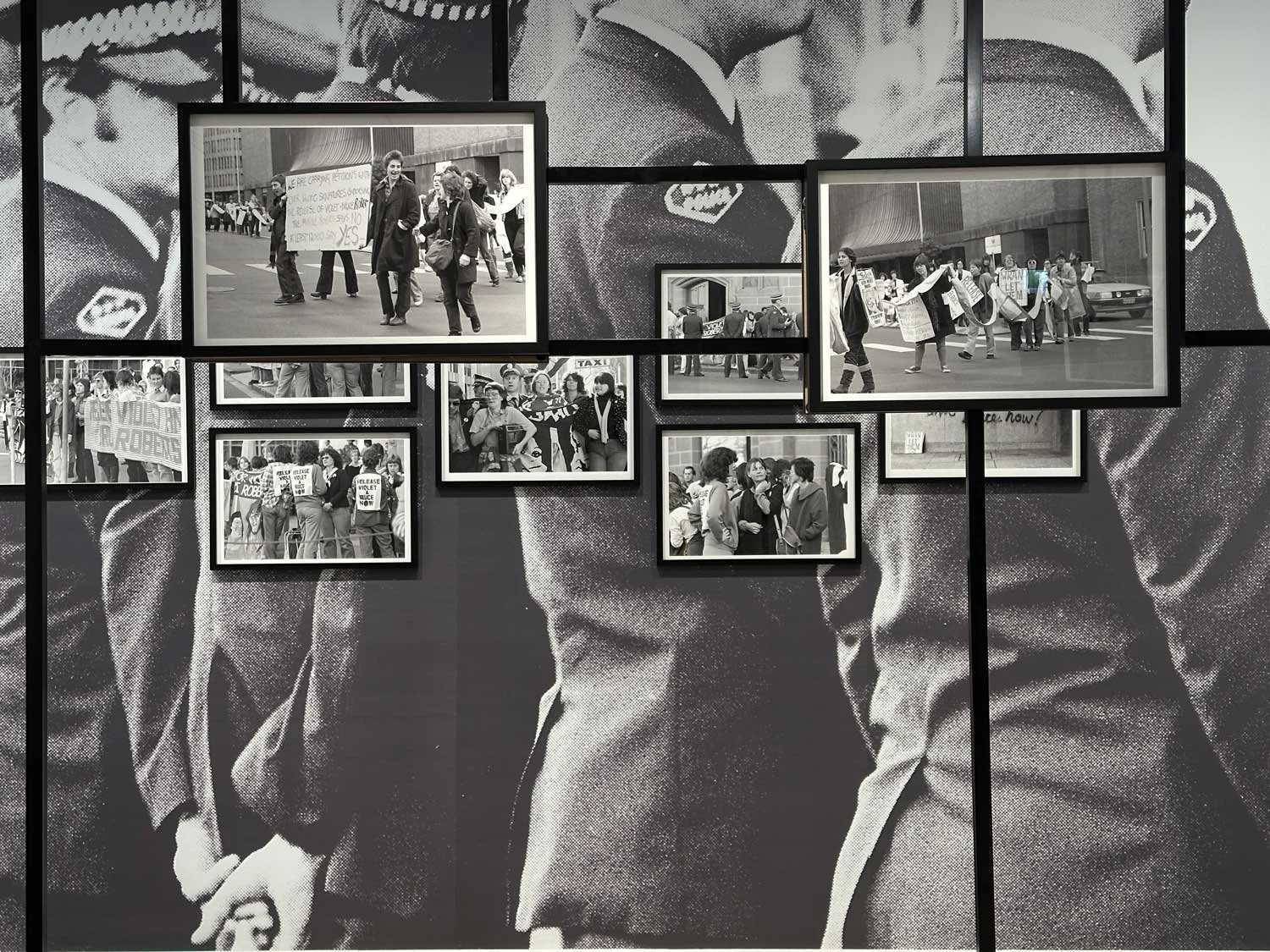
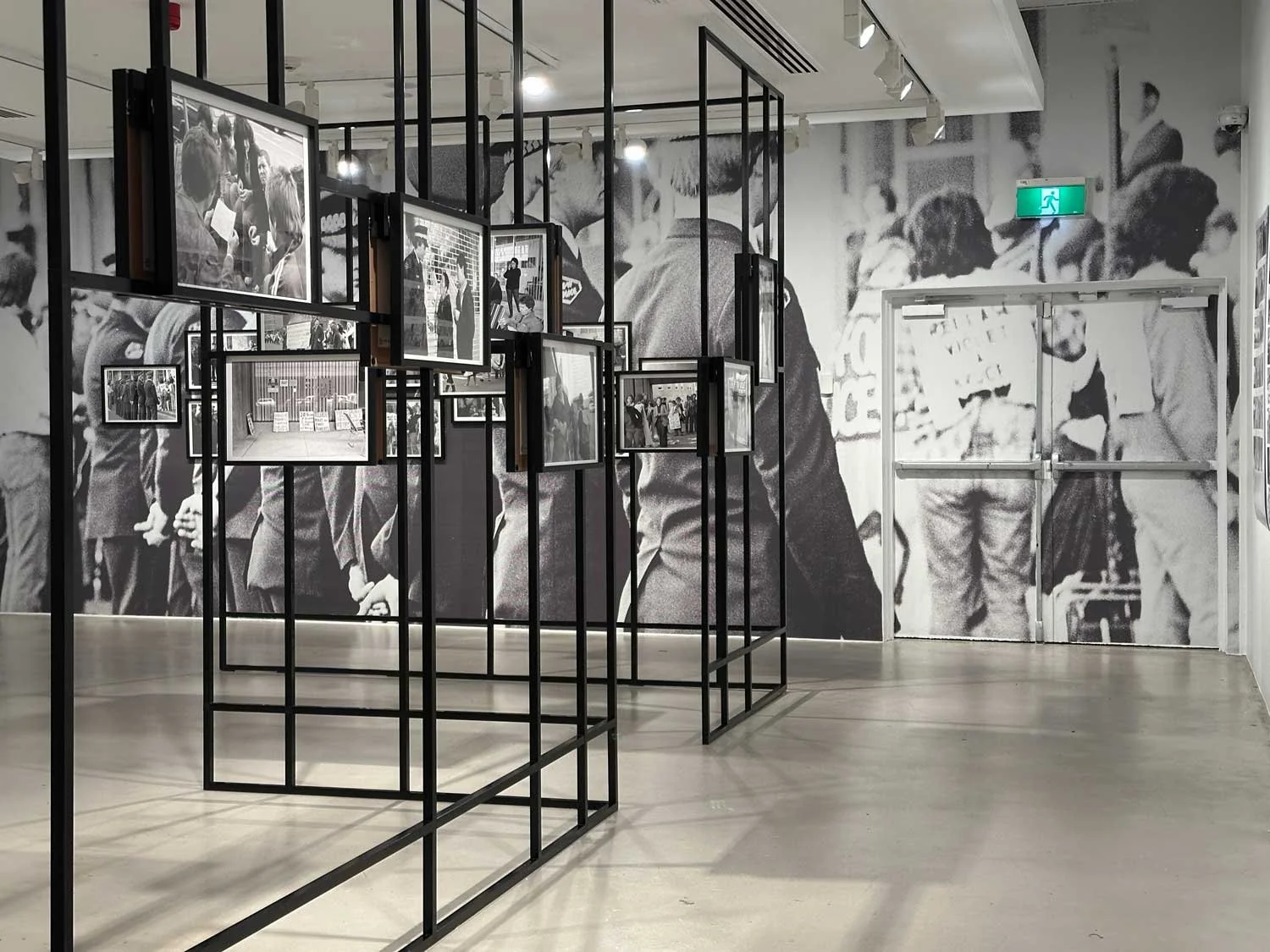
'Justice for Violet and Bruce' showing in 25th Biennale of Sydney, Mar 14 - Jun 14, 2026 by Helen Grace

Part of the really strong selection of work in the Biennale of Sydney exhibition at the amazing Campbelltown Art Centre

In 1980, Women Behind Bars, a courageous group of activists, campaigned for the prison release of Violet and Bruce Roberts, jailed for life after a short trial for the murder of Eric Roberts, Violet’s husband and Bruce’s father. They had endured years of domestic violence. Women Behind Bars used creative tactics to draw attention to the case, successfully campaigning for their release. Their conditional release was possible using the argument of provocation – a defence that is no longer admissable because it has since been used by perpetrators in defence of their actions (‘See what she made me do’). These photographs by Helen Grace documented the campaign, its dramas and its performativity. We can say that street art, actions, demonstrations are part of the history of performance art  in a place – and in this case, many artists were involved, as well as the activists, putting their bodies on the line, risking arrest. Since 1980, protest laws have tightened and it is likely that the imaginative actions taken by the group in 1980 would not be allowed today. Every nine days a woman is killed by a current or former partner. Time itself serves as a form of developing agent, acting on the image, giving it even greater force in the present than it had in the past. And collective action has its own force and heroism, which always exists.

‘I wanted to find a way of mobilising the image, especially these images of a movement – to move them off the wall, so we get a sense of the cumulative effects of action. And so audiences can move through them, getting a sense of the action, and of the collective event.’

Just Announced! 25th Biennale of Sydney Artists! by Helen Grace

A few clicks away for good reason, but I’m thrilled to say I’m in the upcoming 25th Biennale of Sydney, launching next March 14th, 2026 and running to 14th June 2026..

You can check it out here:

History versus memory, and memory versus memorylessness. Rememory as in recollecting and remembering as in reassembling the members of the body, the family, the population of the past.

– Toni Morrison, Mouth Full of Blood: Essays, Speeches, Meditations by Toni Morrison, 2019. London: Penguin Random House, p. 323.

A means of revisiting, reconstructing, and reclaiming histories that have been erased or repressed, Rememory signifies the intersection of memory and history, where recollection becomes an act of reassembling fragments of the past—whether personal, familial, or collective. The 25th edition of the Biennale connects the delicate space between remembering and forgetting. By engaging with Rememory, artists from across the world and within Australia will highlight marginalised narratives, share untold stories, and inspire audiences to rethink how memory shapes identity, and belonging, and strengthens the understanding and recognition of the histories and connections that form the contexts and pillars of community.

Unlike traditional ideas of memory as simply “remembering,” rememory delves into the fragmented and forgotten parts of history. In Toni Morrison’s work quoted above, this concept challenges the dominant narratives of American history by bringing attention to African American experiences and stories often left untold.

The 25th edition reimagines Morrison’s idea of rememory through the presentation of contemporary art, music, storytelling, and cultural engagement within the context of Sydney, Greater Sydney, and the diasporic communities calling this unceded land home. Through the defiant act of sharing, seeing, and understanding, artists and cultural practitioners participating in this edition explore the hidden effects of history and how it continues to shape the present in an evolving and consuming conversation. Rather than focusing on linear storytelling, the edition will highlight how we can become active participants in retelling our collective histories by revisiting and reinterpreting past events.

Rememory celebrates the diverse contexts, understandings, and experience of humanity by inviting artists to reflect on their own roots while engaging with Sydney and its surrounding communities and histories. The edition will feature works that explore migration, exile, and belonging, giving voice to stories from Aboriginal communities and the divergent diasporas that shape Australia today. A dedicated program for children and young audiences will provide space and exploration for these stories to be passed on to the next generations.

Rememory will platform creative, non-hierarchical methods of storytelling, including micro-broadcasting and sharing circles. Through self-authorship and embodied practices, the exhibition seeks to amplify marginalised voices and create new ways of engaging with history. It encourages audiences to rethink what they know about the past and embrace a world where memory is shared and made collectively.

As observed by documenta 11 curator Okwui Enwezor, the postcolonial world is not distant or disconnected; it is a place of connection and shared experiences. It is where diverse cultures come together to imagine new meanings and systems for preserving memory in today’s rapidly changing world.

Launching today ! Until We Meet Again - จนกว่าเราจะพบกันอีก - Bangkok Art and Culture Centre, August 16th - November 26th, 2025 by Helen Grace

Sharing some install views for our show, launching in Bangkok today

Helen Grace, Five Tales of Future Dreams, Video Installation, 5 channels, 7 mins duration each

Phaptawan Suwannakudt, Hidden Screens, 36-panel painting/drawing/fabric/embroidery installation in 6 parts

Until We Meet Again - จนกว่าเราจะพบกันอีก - Bangkok Art and Culture Centre, August 16th - November 23rd, 2025 by Helen Grace

We’re happy to announce our new exhibition, opening in Bangkok on August 16th

Until We Meet Again - จนกว่าเราจะพบกันอีก

It's no easy feat, nor a mere coincidence, for two people to meet, be destined to meet again, and then to truly do so. But will it be only a fleeting event, or merely something briefly noted in a diary?

Until We Meet Again - จนกว่าเราจะพบกันอีก  is a dialogue between Helen Grace and Phaptawan Suwannakudt, charting shifts in gender roles across cultures – Australia, Thailand and Hong Kong – over a period of fifty years. Narrated through personal chronicles of historical moments, the project traces displacements through sounds, images, interwoven objects and experiences. The exhibition will occupy Bangkok Art and Culture Centre in August 2025. The artists construct an extensive installation – sculpture, video installation and memory traces. Serendipity and synchronicity guide real and imagined intersections as they explore the times and spaces that have shaped us. 

Until We Meet Again - จนกว่าเราจะพบกันอีก echoes the title of a novelette by the renowned Thai writer, Sriburapha, written on his return to Thailand after a period of living in Australia in the late 1940s.

PROTEST IS A CREATIVE ACT, MUSEUM OF AUSTRALIAN PHOTOGRAPHY by Helen Grace

A quick visit to Melbourne at the weekend to attend the opening of this new exhibition at MAPh. I’m happy to have work included amongst a marvellous group of legendary figures. A timely show.

Protest is a creative act

By facilitating a conversation between women and nonbinary artists across the decades, Protest is a creative act confirms that many of the issues addressed by women photographers in the 1970s – around the body, sexuality, race, national identity and the environment – have not been resolved.

These concerns are shared today by a younger generation of artists who build upon inheritances of the past, demonstrating their objection and defiance through new creative strategies. Collectively, the historical and contemporary works in the exhibition show the importance of friendship and community, and the good that can come from working together to advocate and agitate for change.

Protest is a creative act is curated by Guest Curator Kelly Gellatly and Angela Connor, Senior Curator at MAPh.

Participating artists
Jesse Boylan, Sophie Cassar, Miriam Charlie, Virginia Coventry, Mary Cox, Brenda L Croft, Destiny Deacon, eX de Medici, Sandy Edwards, Bonita Ely, Liss Fenwick, Sue Ford, Juno Gemes, Viva Gibb, Helen Grace, Janina Green, Ponch Hawkes, Siri Hayes, Amrita Hepi, Naomi Hobson, Alana Hunt, Carol Jerrems, Ellen José, Laresa Kosloff, Rosemary Laing, Honey Long and Prue Stent, Angela Lynkushka, Ruth Maddison, Alex Martinis-Roe, Viv Méhes, Eden Menta and Janelle Low, Jill Orr, Daisy Noyes, Ruth O’Leary, Wendy Rew, Elvis Richardson and Virginia Fraser, Therese Ritchie, Jess Schwientek, Tara Shield, Tina Stefanou, Salote Tawale, Kawita Vatanjyankur, Jemima Wyman

7 June – 31 August 2025
Museum of Australian Photography

860 Ferntree Gully Road
Wheelers Hill Victoria 3150


SONIC TRILOGY - PART OF WOMANIFESTO INSTALLATION AT SHARJAH BIENNIAL by Helen Grace

We’re happy that Sonic Trilogy, a collective project as part of the Womanifesto WeMend installation is now showing at Sharjah Biennial - Sharjah Biennial 16: to carry, February 6th - June 15th, 2025

For more on the WeMend Project, see here

And some pix from the Womanifesto Sydney group’s work-in-progress for the Sharjah Biennial, carried to Bangkok by Phaptawan Suwannakudt for assembly before being carried to Sharjah

PHOTOSYNTHESISERS: WOMEN AND THE LENS, TE URU by Helen Grace

Thrilled to be in this awesome show and looking forward to visiting in early May

Photosynthesisers: Women and the lens

16 FEB – 25 MAY 2025
GALLERIES TWO, THREE

420 Titirangi Rd

Titirangi, Auckland

+64 9 817 8087info@teuru.org.nz

Photosynthesisers: Women and lens is an exhibition of photographs and videos by 41 women artists and collectives from Aotearoa and Australia, including fa`afafine1, queer, and trans women, and those with ancestral ties to Aboriginal, Māori, and diasporic communities. Produced between the 1960s and 2024 by four generations of artists, exhibited works collectively offer cross-cultural and intergenerational perspectives on the social, political, and cultural conditions that impelled their capture.  

The exhibition title draws on photosynthesis, the process by which plants absorb, transform, and redistribute light energy. Likening this alchemy to that of lens-based practices, Photosynthesisers holds that exhibited photographs and videos transmit sociopolitical energy through a similar adaptation of light. Passed through the lens of one context, light forges images that are preserved for others, forming pleats in time, carrying manifold, often quiet conditions that produce and reproduce history with shifting resonance as time develops. The camera enables this world-building transformation, channelling information through a socio-material network, like a root system. The gendered framework for Photosynthesisers derives its shape from a similarly diverse and evolving complex of positions and pulses—identity is taken as a malleable form of expression, rather than a fixed category. 

From feminist utopias to traumatic domestic memories, nuclear fallout to patriarchal monuments, gay liberation to motherhood, interpersonal relationships to cultural heritage and ecology, housing and labour to forms of violence, the effects of time to gender, sexuality, love, and community, the photographs and videos in this exhibition map wide-ranging social and political concerns—many from queer and feminist positions. Numerous works feature the artists themselves, functioning as self-portraits to varying degrees of performativity. Others document local communities, events, or actions. Some are documentary or diaristic in nature, while others relay personal, interpersonal, or societal circumstance through constructed imagery. All share in the astute and caring observation of their makers, whose materialised visions connect us to the diversity of human experience through intimate details, subversive ideological positions, and ranging emotional registers—all of which might otherwise be lost to sweeping accounts of history. Importantly, the rendering of these observations into shared aesthetic experience is not an endpoint, but rather a passage through which lens-based practices transmit energy in the form of images and desires that exhort critical reflection.  

The exhibition is accompanied by a reader, which collates 30 texts produced between 1981 and 2024 by artists, curators, and writers from the region. These texts take the form of article, essay, interview, lecture, review, thesis, or subchapter, collectively tracing parallel ideas, exhibitions, and histories.

Curated by James Gatt. 

1 Fa’afafine is a third gender. This Samoan term translates as ‘in the manner of a woman’.

Presented in association with Te Ahurei Toi o Tāmaki Auckland Arts Festival 2025.