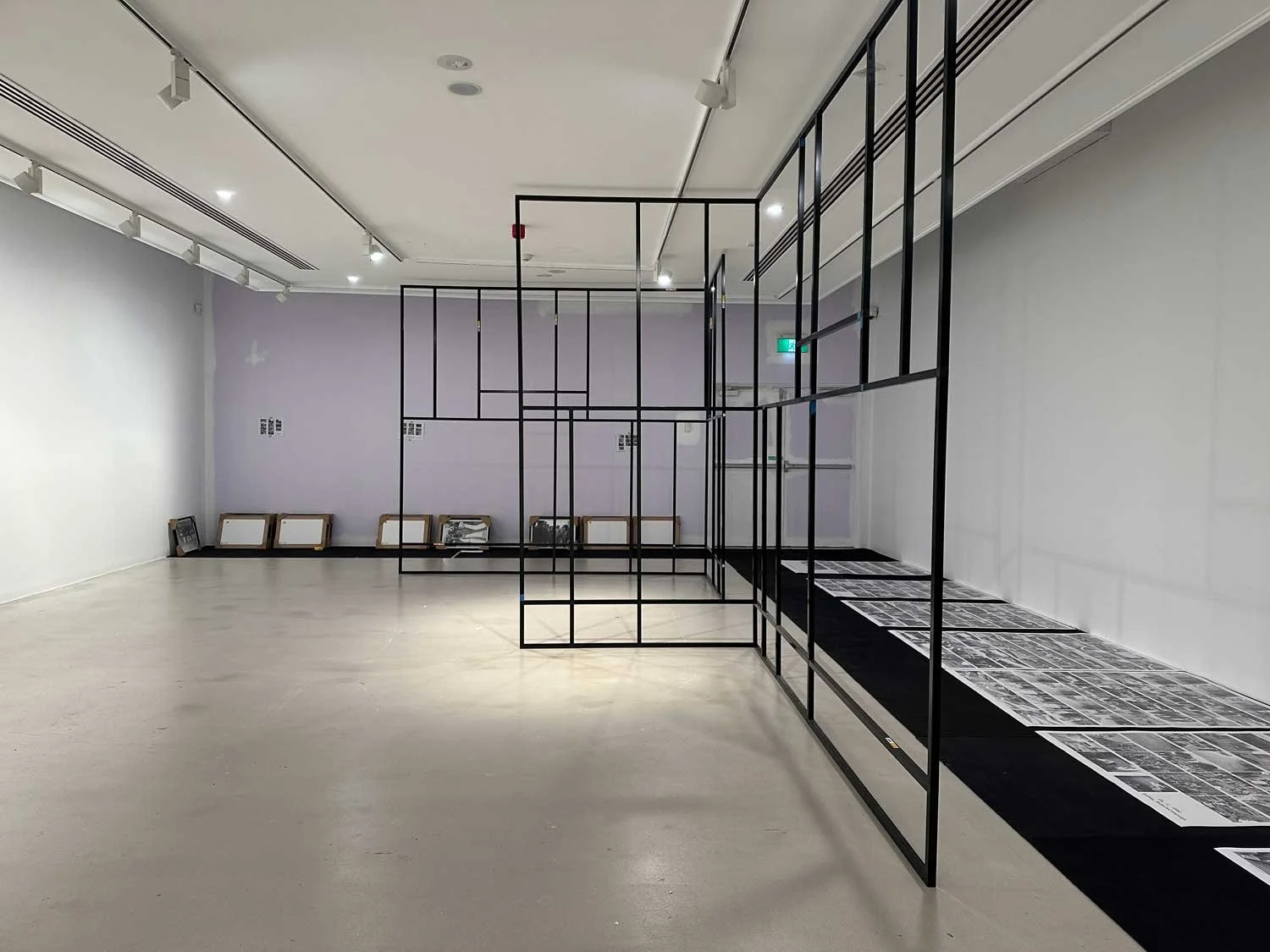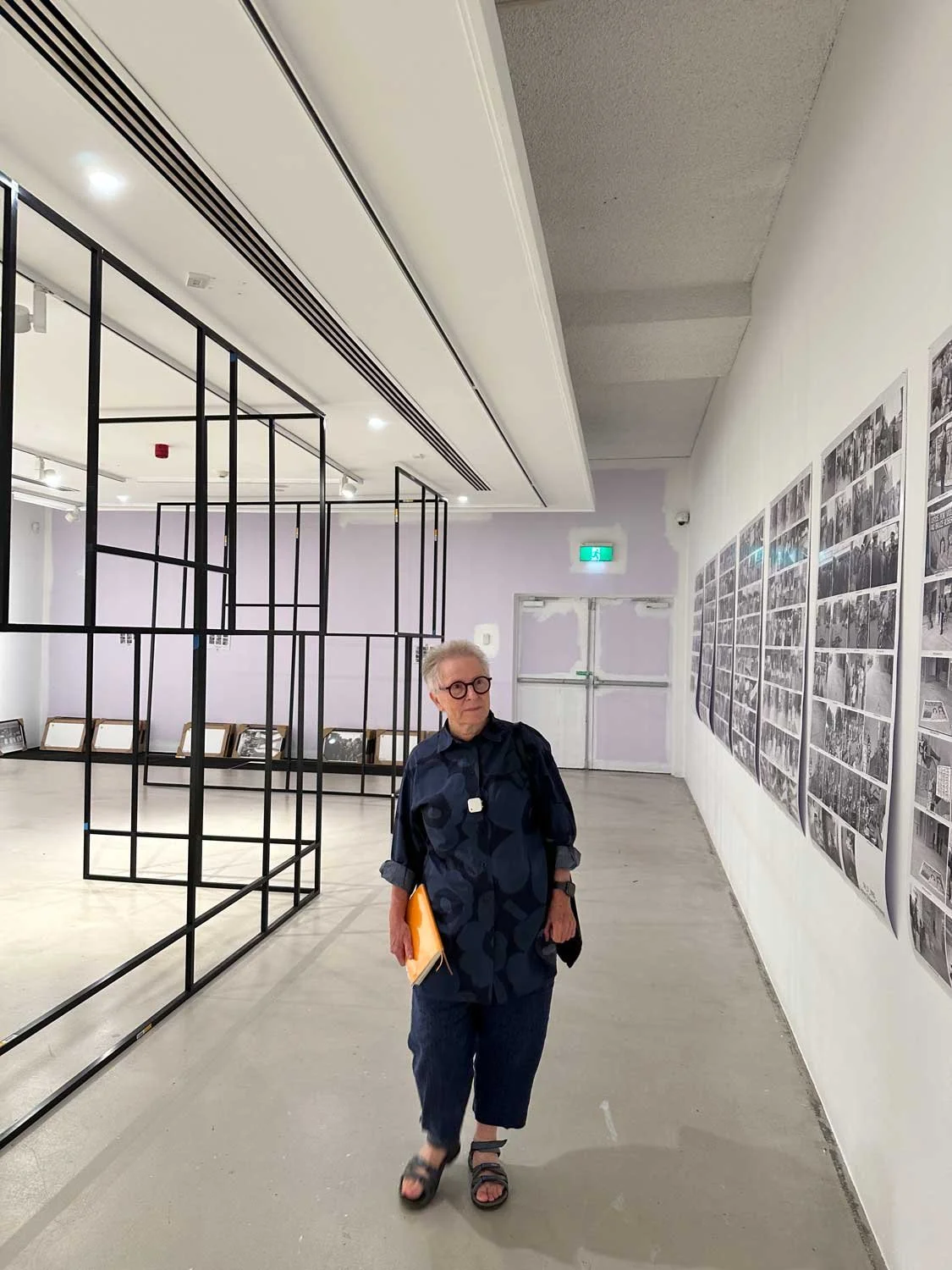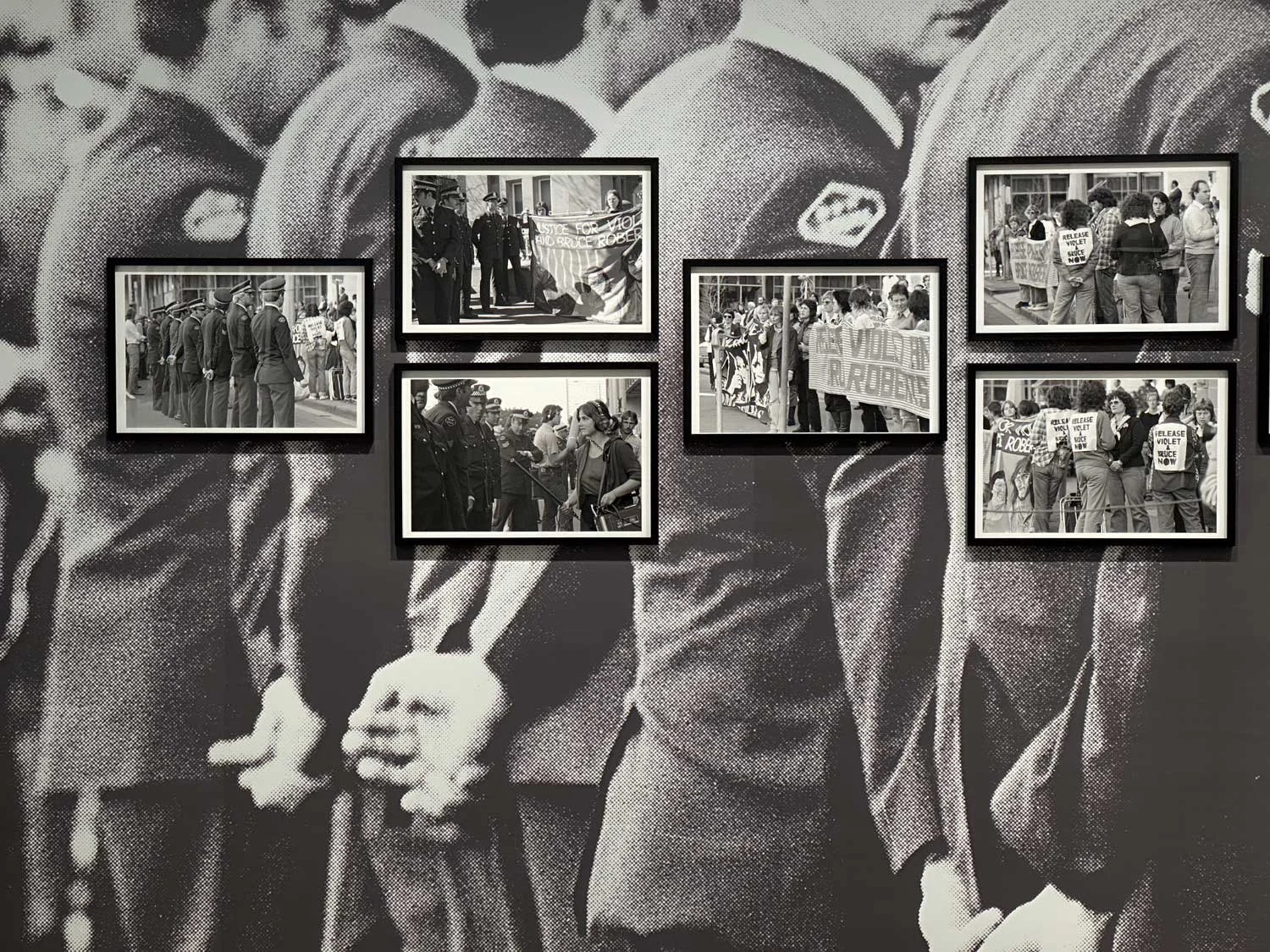
Part of the really strong selection of work in the Biennale of Sydney exhibition at the amazing Campbelltown Art Centre
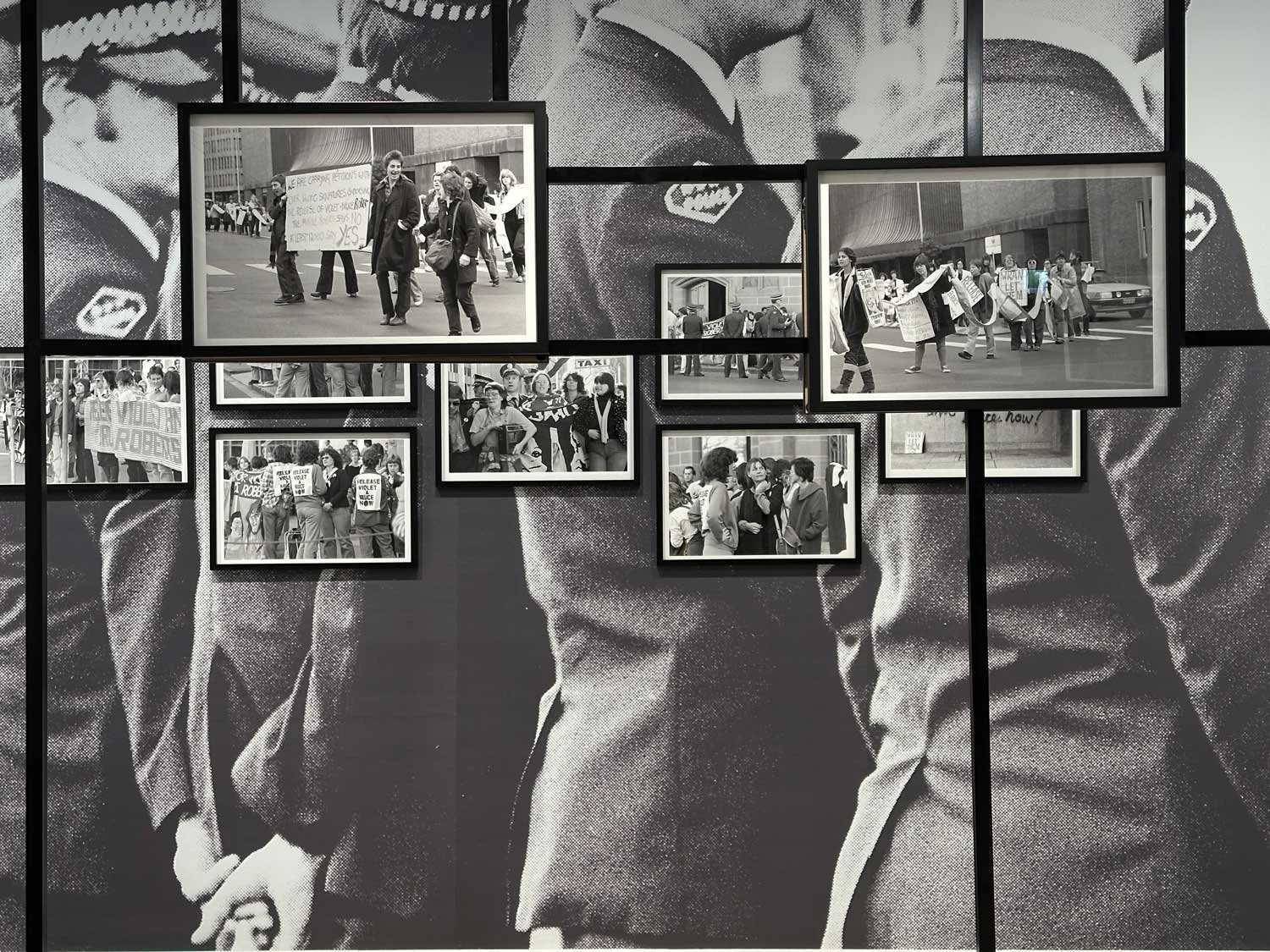
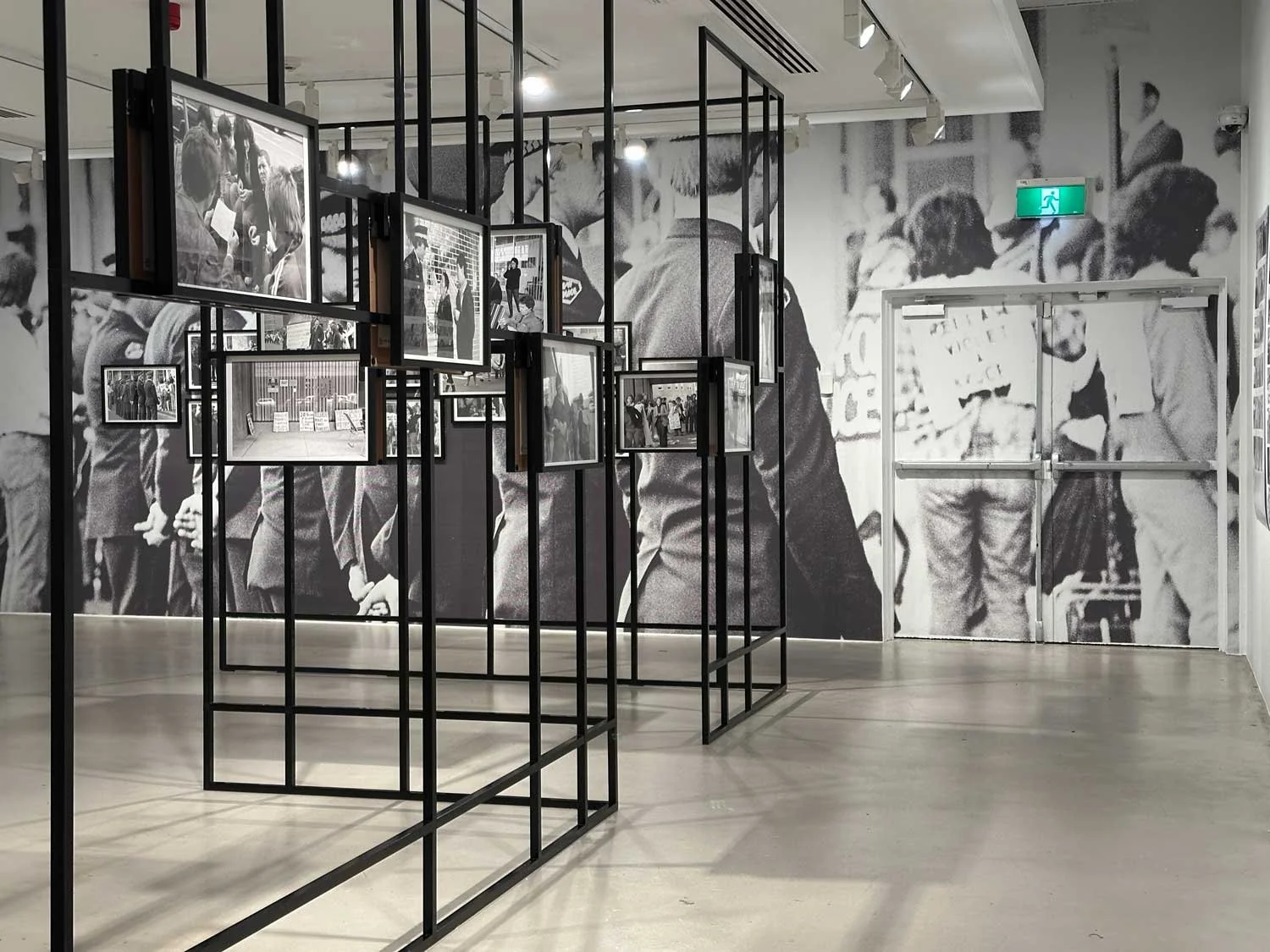
In 1980, Women Behind Bars, a courageous group of activists, campaigned for the prison release of Violet and Bruce Roberts, jailed for life after a short trial for the murder of Eric Roberts, Violet’s husband and Bruce’s father. They had endured years of domestic violence. Women Behind Bars used creative tactics to draw attention to the case, successfully campaigning for their release. Their conditional release was possible using the argument of provocation – a defence that is no longer admissable because it has since been used by perpetrators in defence of their actions (‘See what she made me do’). These photographs by Helen Grace documented the campaign, its dramas and its performativity. We can say that street art, actions, demonstrations are part of the history of performance art in a place – and in this case, many artists were involved, as well as the activists, putting their bodies on the line, risking arrest. Since 1980, protest laws have tightened and it is likely that the imaginative actions taken by the group in 1980 would not be allowed today. Every nine days a woman is killed by a current or former partner. Time itself serves as a form of developing agent, acting on the image, giving it even greater force in the present than it had in the past. And collective action has its own force and heroism, which always exists.
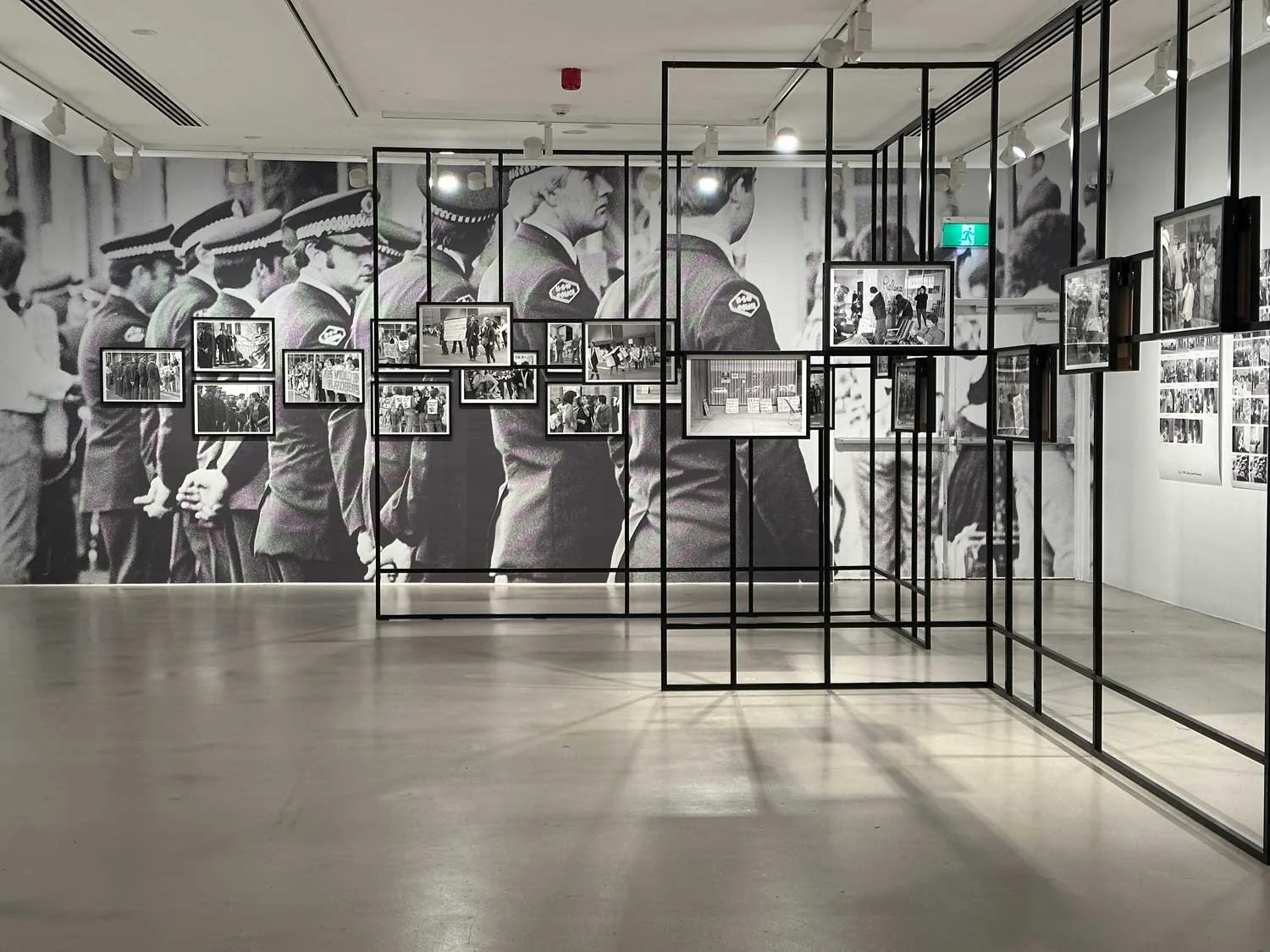
‘I wanted to find a way of mobilising the image, especially these images of a movement – to move them off the wall, so we get a sense of the cumulative effects of action. And so audiences can move through them, getting a sense of the action, and of the collective event.’